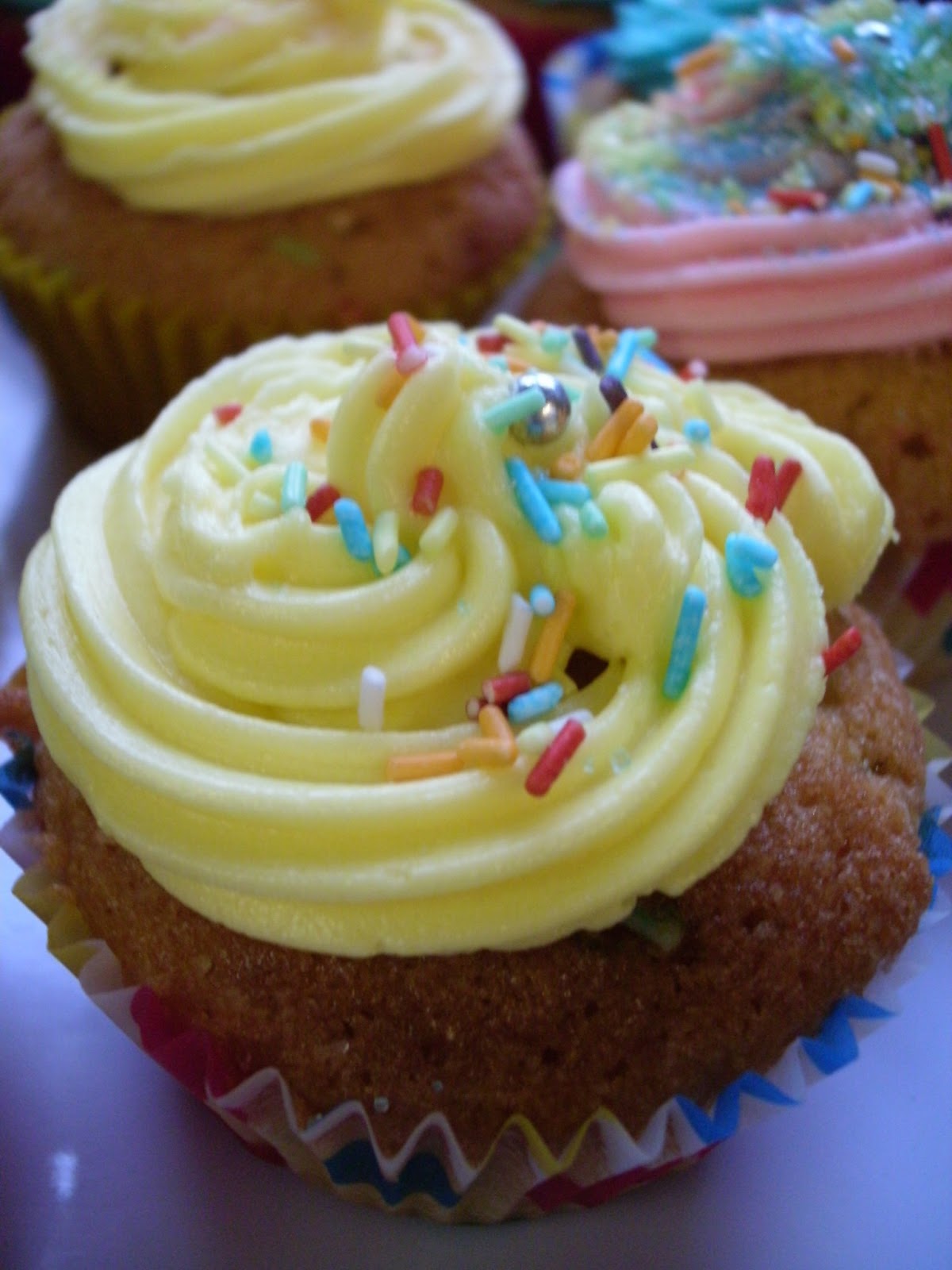
Showing posts with label icing. Show all posts

Friday, 10 May 2019

Happy Birthday, Mummee! How to do Swirled Icing

Wow, have I really written 360 blog posts? That's a lot! And to celebrate, I'm sharing the cake I made for my Mum's birthday! Seems quite ordinary, but I'll explain.


When you’ve made as many cakes as I have, sometimes you hit a creative drought. 2017 was an extremely prolific year for my blog, and I think since then my output has been a little stunted by life stresses and pressures: work, wedding planning, martial arts exams, learning how to drive, etc. The last two years has been a manic time in my life, all in good ways for a change! 

Because so much happened over such a short time, I’ve been playing catch up with myself pretty much all throughout. My blog, as such, went on the back burner. 

But now, as school is slackening off in preparation for summer (the Irish summer holidays are very long, and normally start in the last week of May right up until the last week of August, except for those doing state exams) and I’ll soon be having about three months’ paid holidays and loads of free time, baking will be back on the menu big style. 

But anyway, back to what I was saying about creative drought. 

When a family birthday comes around, sometimes I feel a little uninspired: my brother Paddy loves the same chocolate cake every year, my brother Andrew loves the same coffee cake every year, my Mum loves the same lemon cake every year, my Dad loves either a coffee cake or some kind of Bakewell thing every year, I love the same strawberry and cream cake every year.... the only person who likes to try something different every year is my sister Nix, because she loves having a big fuss made over her for her birthday (and why not?) 

So, May rolled around this year and again it’s time to make a lemon cake for Mum’s birthday. It’s always yellow, always zingy lemon, and always has lemon curd in it. However, this year I decided to use a piping technique that I’ve seen on Pinterest and Instagram so many times but never got around to doing myself. 


Normally, when you do a swirled icing with many colours, one folds the piping bag open over their hand and scrapes the different colour icings along the inside, avoiding contact with each other, so that when you twist and pipe they come together out through the nozzle. However, I’ve found sometimes the colours mix as you pipe, so the distinction between them completely disappears. You can also pop piping bags in piping bags, which is a little wasteful for me. 

I’ve seen people getting around this problem online by using clingfilm (which, albeit wasteful, is nowhere near as wasteful as using loads of piping bags) to keep the colours separate: they spoon the icing into a sheet of film, fold it over to enclose the colour, then add another colour alongside it, then wrap it again, and so on. What you end up with is like a clingfilm and icing Swiss roll of many colours. 


And this worked perfectly! I went with a classic complementary scheme (yellow and purple) and it worked wonders: the white, yellow, and purple stayed separate all throughout piping without mixing. I recommend this method, as long as you don’t mind using cling film.  

Tuesday, 6 December 2016

I've Finally Cracked It! Working with Yeast and Spelt: Iced Finger Buns (Wheat Free, with Dairy Free Option)

UPDATE 05/05/2017: I slightly altered the dough preparation method, introducing a sponge technique to help dissolve the yeast, and properly gauge the amount of flour and liquid needed.

I've done it. I've finally done it. I have succeeded after years of trying: I have at long last cracked the code to making dough with yeast and spelt! So many years of failed attempts... I'm so relieved.

So, I decided to celebrate by making a tasty batch of lovely iced finger buns! A little taste of childhood for my siblings and I.


There is nothing quite as English as spreading a load of icing on top of a piece of bread. I don't quite know why, but it fairly accurately sums up the spirit of the British approach to eating. And to make them, you need a nice, soft, pillowy bread recipe.

So what has my difficulty been with spelt and yeast? I've mentioned many times over the years, more than I can count at this stage, that spelt and yeast don't mix well. This was a believe I had formulated as a result of countless failed attempts at making yeast leavened dough with spelt flour instead of wheat flour. I thought the problem was the flour. Turns out the problem has been the yeast and the fermentation process all these years.

Ireland doesn't have a very warm climate: it has a wet, damp, humid, mostly freezing cold climate. None of these is conducive to:

1. Fermentation
Yeast needs a nice warm environment to grow in. It is indeed a living organism, a tiny little mushroom creature, that needs to be warm, well fed, and hydrated to perform like it should. I obviously haven't been getting my dough proving at the right temperature of humidity all these years, because the dough has never risen.

or 2. Yeast Lifespan
Cold damp houses aren't nice places for yeast to live. I'd say more times than not over the last few years, I've used yeast that has probably already perished under such inhospitable conditions.

I bought some new yeast, some new flour, and attempted to make yeast dough again. I summed up the courage to attempt it again, even though it may have failed miserably. This time, I was not disappointed.

I had formulated the recipe by cross referencing a load of recipes together, inspired mostly by the Korean doughnuts and dinner rolls of Maangchi, and by the iced bun recipe of The Great British Bake Off's Paul Hollywood. I also followed some recommendations online about how liquid behaves differently with wheat flour and spelt flour. Armed with this knowledge, I formulated the recipe below.


I made sure the dough had a lovely house to live in while fermenting: the oven, with the heat turned off but the light left on, with a bowl of boiled water on the bottom shelf to make it nice and steamy. This made the dough rise perfectly! I was amazed: the dough looked, and smelled, incredible. Look at all those bubbills!!


Although I had a little hiccup with the oven, where the element was broken and I had to improvise with the fan assisted grill setting, they baked wonderfully! The rolls were exquisitely soft and springy on cooling, and had a deliciously present yeasty flavour. 


The butter, sugar, and eggs keep the bread soft, but not too sickly sweet or rich. In fact, I think they'd make nice hot dog rolls if the mixture were slightly re-purposed.


See the lovely soft sides, and delicious texture within? I know I'm totally fangirling over this bread right now, but I cannot tell you how happy I am to finally have a successful spelt bread attempt.


So, without any further ado, after almost four years of blogging, I present to you a recipe for soft spelt bread.

FREE FROM
☑ Soya (check for soya lecithin)
☑ Wheat
☑ Nuts

CONTAINS
☒ Eggs
☒ Dairy (dairy substitutes can be found in italics)
☒ Gluten
☒ Yeast
☒ Refined sugar products


INGREDIMENTS
For 16 small buns, or 12 large buns
  • 1 pound (455 grammes) white spelt flour, plus some for dusting
  • 2 quarter-ounce (7 gramme) packages of dry active yeast
  • ½ teaspoon (3 millilitres) salt
  • 2 ounces (55 grammes) caster sugar
  • 2 medium eggs, room temperature
  • 6 fluid ounces (180 millilitres) hand-hot milk
  • 2 or 3 tablespoons (30 to 45 millilitres) warm water, to adjust the texture if needed
  • 2 ounces (55 grammes) butter, at room temperature, or margarine
For icing,
  • 1 tablespoon (15 grammes) butter, or margarine
  • 3 ounces (85 grammes) icing sugar
  • 2 to 3 teaspoons (10 to 15 millilitres) hot water
  • Optional: Food colourings and essences

METHOD

First, prepare the yeast dough.
  • In a large bowl, mix together the sugar, milk, salt, and eggs. Mix in the yeast, and then add in half of the flour to make a paste. If it is too dry, add more milk or water, and if it is too wet, add some more flour. It should be like a gluey paste, not a cake or pancake mixture.
  • Allow this mixture to sit for about 20 minutes, or until it starts to rise and bubble. If you like, you can allow to it rise until doubled, which will save kneading time.
  • Add in rest of the flour, a little at a time, to form a dough. You can use your hands, or a wooden spoon. You may not need to add all the flour, or you may need to add some more. Bread making is not an exact science: sometimes room humidity, or even the brand of flour, can change the consistency.
  • Once you achieve a dough, turn out onto a floured work surface and knead for 5 minutes. The dough should be soft and tacky, almost sticky.
  • Then, knead in the soft butter. It will take another 3 or 5 minutes to knead in the butter, and once you're done it should be a lovely soft, supple, tacky (but not sticky) dough.
  • Clean out the bowl and grease it lightly. Roll the dough into a ball and put in the bowl, tossing a few times to coat it in oil.
  • Cover with clingfilm, then a tea towel, and leave to rise in a warm place for 1 to 1½ hours to at least double in size. I put mine in the oven, turned off, with the oven light on, and a bowl of hot water on the bottom shelf to make a nice warm, humid atmosphere. 

Now, make the fingers.

  • Grease and flour a 13 by 9 inch (33 by 22 centimetre) flat baking tray.
  • Once risen and puffed full of air, gently deflate and turn out onto the work surface. Only use a dusting of flour if it's sticking.
  • Divide the dough into 16 pieces, and roll each piece into a rectangle about 4 inches (10 centimetres) wide; the length doesn't matter. Roll them up like little Swiss rolls.
  • Place the rolls on the baking tray about an inch (2 centimetres) apart to allow for rising. You want them to rise into each others' sides to get nice soft sides.
  • Drape a clean tea towel or the clingfilm from earlier over the rolls and place back in the warm place and leave for 45 minutes to an hour, until once again at least doubled in size.
  • Preheat your oven to 220ºC (425ºF, Gas Mk.7 or 8), then bake the rolls on the centre shelf for 10 to 12 minutes, or until golden brown on top and well risen.
  • Turn the buns out, still attached to one another, onto a wire rack to cool completely before pulling apart.
I used two trays because I didn't have one big enough. 
And yes, there are 14. I miscounted my doughballs.

Once fully cool, ice the fingers.
  • Mix together the icing sugar, butter, and half of the water until a smooth icing is formed. You may need to add more water to make it nice and spreadable.
  • Spread about a rounded teaspoon of icing onto each roll and spread it across the top with the blunt side of a table knife, or a palette knife.
  • If you like, you can decorate the tops with sprinkles, hundreds and thousands, sweets, or grated chocolate.
I decorated mine with some coffee flavoured icing, and some plain icing in white and pink. Look forward to more experiments with spelt bread in the future, but for now make these and enjoy them for up to two days, as long as they're kept airtight.


Monday, 12 January 2015

Chocolate Brownie Icing

Over the course of my bakery days, I had tried a lot of recipes for chocolate fudge icing, which can double function as glaze. As a child I had a book called "I Can Cook", which was a little paper back book with about 16 pages of easy recipes, one of which was a chocolate fudge icing. It was basically chocolate, butter, sugar and milk, but it required making a simple syrup with the milk and sugar, and it used an inordinate quantity of sugar and milk. It makes a lovely sticky sweet fudgy icing that sets beautifully thick for spreading, but I don't think it really works well as a brownie glaze.

I then watched a great video (in German) about how to make American style chocolate cake, and in it she included a recipe for "Schokocreme", which is basically chocolate fudge icing. It is super, super, too rich, as it uses equal quantities of chocolate and butter. Here in Ireland, the commonest form of butter is salted, meaning the finished icing was quite salty as well. I then put my thinking cap on to see if I could find a middle ground between too much sugar and too much butter.

So, I tried a few variations on a theme, until I settled on this quite effective recipe:

  • 4 parts chocolate (dark, milk, or white)
  • 2 parts icing sugar
  • 2 parts butter (or margarine)
  • 1 part milk (or coffee works too)
To make, simply melt the butter, sugar, and milk together in a microwave safe bowl on 1 minute bursts on "Defrost", or in a bowl over a pan of simmering water; once melted, beat in the sugar. What's that I hear you say? Is that it? Yes. Yes it is.


For a tray of brownies, which is roughly a 10 inch (25 centimetre) square in my case, 4 ounces of chocolate, 2 ounces each of butter and sugar, and 1 fluid ounce of coffee works really well for me to pour on top of the brownies while they're still hot, and then the whole batch cools down together. This means that the frosting fuses nicely to the cake surface, preventing the set icing from peeling off in layers, which can sometime happen when hot icing is poured onto cold cake.

This makes a nice mixture that's both pourable as a glaze when hot (which I use for topping brownies, as pictured), and spreadable as an icing when cold. Also, you can use it as a whipped filling if you beat it when it is fully cold.

While its wet, you can sprinkle things into it and they set into it perfectly. This icing works really well also as a piped icing for fairy cakes, due to its decadent nature.


It has a slightly soft, impressionable texture when set, and is great for decorating tray bakes. This seems to work equally well with dark, milk or white chocolate, whereas other recipes I've tried in the past really don't work with white chocolate, given its high fat content.


Monday, 15 December 2014

Fairy Cakes with Buttercream (Gluten-, Dairy-, and Egg Free)

I have a lot of friends (and a mother) with a lot of allergies, and every friend has their own unique combination of allergies. So, I decided to kill all the birds with one stone by making an allergen free batch of fairy cakes, drawing on a few recipes I found online. It took a few attempts, but they turned out nicely!


These cakes are gluten-, egg-, and dairy free, meaning basically anyone can have them; the buttercream is made using vegetable margarine, too.


I did a lot of research before I made these. I remember last year sometime being introduced to the idea of American wacky cake, which was a recipe invented during the Depression era when butter and eggs were in short supply, making it suitable for dairy and egg allergy sufferers. I then decided to see if making wacky cake with gluten free flour would work, and it did. I followed the first recipe (which I found here) to the letter, but when made with gluten free flour it was a little greasy; I retried using a little more flour, and it was a success.


Now, I use self-raising gluten free flour, which has added raising agent and a touch of xanthan gum. If you can only find plain gluten free flour, per 6 ounces (170 grammes) of plain flour add in 2 teaspoons (10 millilitres) baking powder, and 1/4 teaspoon (2 millilitres) xanthan gum, and sieve together.


FREE FROM
☑ Soya (check for soya lecithin)
☑ Yeast
☑ Eggs
☑ Gluten

☑ Dairy

CONTAINS
☒ Refined sugar products


INGREDIMENTS:
  • 6 ounces (170 grammes) self-raising gluten free flour (I use Doves Farm brand)
  • 6 ounces (170 grammes) caster sugar
  • 3 tablespoons (45 millitres) cocoa powder
  • Pinch of salt
  • 1 teaspoon (5 millilitres) vanilla essence
  • 5 tablespoons (2½ fluid ounces; 75 millilitres) sunflower oil
  • 8 fluid ounces (240 millilitres) water

METHOD
  • Preheat oven to 180°c (350°F, Gas Mk. 4) and line a 12 hole muffin tin with paper cases.
  • Sieve the flour, sugar, cocoa, and salt together into a large mixing bowl; make a well in the centre, and add the vanilla, oil, and water.
  • Mix gently with a wooden spoon until the flour it just moistened. Don't over mix, or the cakes will by dense and dry.
  • Divide the mix between the cases, filling each case to three-quarters full. Bake in the preheated oven for 15 to 20 minutes, or until spongy to touch and a cocktail stick comes out clean when poked through the middle of a cake.
  • Allow to cool in the tin for about 5 minutes before moving the cakes to a wire rack. Allow to cool completely before icing.


I made some with the cocoa, and some without. The plain vanilla cakes I iced with raspberry buttercream, and the chocolate cakes I iced with chocolate buttercream. To make the buttercream, use the instructions inthis blog entry, and the ingredients listed below.

RASPBERRY BUTTERCREAM
  • 1 ounce (30 grammes) vegetable margarine
  • 1 ounce (30 grammes) raspberry jam
  • 4 ounces (115 grammes) icing sugar
  • 1 or 2 teaspoons warm water

CHOCOLATE BUTTERCREAM
  • 2 ounce (55 grammes) vegetable margarine
  • 4 ounces (115 grammes) icing sugar
  • 1 tablespoon (15 millilitres) cocoa powder
  • 1 or 2 teaspoons warm water


Fit a piping bag with a half-inch (1 centimetre) closed star tip, and fill with one of the buttercreams. Pipe roses onto the appropriate cakes, by starting in the centre of each cake, piping outwards in a tight spiral until you have covered the whole top of the cake. The result should look like a rose.

And there you are! Some delicious gluten free vegan fairy cakes. I am yet to experiment a bit more with this recipe and make some more adventurous concoctions, but these are a good start. I bought these really pretty boxes in the local Dealz (PoundLand) and they went down a real treat.


Monday, 13 May 2013

Experiment: Homemade Sprinkles


Firstly, happy Coeliac Awareness Week! As you all know, this blog is dedicated to the pursuit of making wheat-free goodies that are as good as any wheat-ful kind you’ll buy in the shops. Please, utilise these recipes to enjoy a few sweeties this Coeliac Awareness Week, just substitute all the spelt flour for gluten-free blend, as spelt is not suitable for a gluten-free lifestyle, just for a select lucky few who are just wheat-intolerant.

Anyway: moving swiftly on.

I’ve always wanted to make my own sprinkles. Why, you ask, would you want to go to all that bother if you can get them in the shop relatively inexpensively? Two reasons: one, when one gets into the mode of making everything themselves from scratch to accommodate for a wheat-free lifestyle, it starts to become less of a necessity and more of a challenge to see how many shop items one can recreate as faithfully as – if not better than – the original version; two, because shop-bought sprinkles have loads of very suspect ingredients in, and my version has only four. Those four ingredients are icing sugar, egg white, lemon juice, and food colouring; if you can get your hands on natural food colourings, you can make completely natural sprinkles.

Also, when you make your own sprinkles, you can make them any shape you want, as long as your piping skill and array of icing nozzles facilitates. I had some left over royal icing from the other day, so I decided to try my hand at making some, and I did a few different shapes. They’re all quite pretty! I think for a first go, they’re pretty awesome...


  • For the traditional, sugar strand style sprinkles, I piped long straight lines of royal icing onto a piece of non-stick baking paper. Once they were completely dry, having been left to set overnight, I cut them into shorter pieces using a sharp knife. You could also break them up with your fingers.
  • I piped a large amount of little dots, and they were pretty cute. They weren’t flat enough to be confetti, but I think they were quite nice in their own right.
  • I also piped some teardrop shapes for added interest; I wouldn’t do that again, to be honest: I didn’t like them as much.


And there they are. I did two different colours and mixed them up, which was a nice touch. You could do any combination of colours: you could have a rainbow mix, or a pink mix with different shades of pink, or green or blue or whatever. Hell, go crazy!


As for the creation of these little beauties, the consistency of the royal icing itself is key. Here are a few tips:

  • Use the recipe in my iced biscuits post, but whip the royal icing to firm peaks. A flowing consistency will be too thin, and the sprinkles won’t keep their shape; very stiff peaks stage is a little too far, but firm peaks stage is just right.
  • Also, when colouring the icing, bear in mind the colour will deepen as the icing dries. Your delicate pink may turn out neon if you’re not careful, but maybe that’s what you want.


This is only my first adventure in homemade sprinkles, so watch this space for more adventures in Sprinkleville!

Thursday, 2 May 2013

How to Use and Abuse Royal Icing, and Wholemeal Gingerbread (Wheat Free)


Recently, I’ve been going through a biscuit phase: for months, I’ve been making loads of different kinds of cake, but as of late I’m feeling the biscuits vibe a bit more. First, I made the dinosaur Kimberleys, which sent me down the road to Gingerbreadville, and then for a friend’s birthday I made some vanilla and chocolate shortbread biscuits that were decorated with royal icing in pretty pastel shades (I unfortunately don’t have photos of these ones: my camera ran out of battery). I first tried royal icing flooding a few years back and I was a little disappointed, but this time round – even after years of not practising – they turned out ninety-percent perfectly. Maybe I was suffering from a case of too-many-mind at the time.

One thing I will say, though, is the exact consistency for flood icing is somewhat elusive and tricky to explain to people; it’s something you just kind of work out one day and know thereafter. The following is the recipe I find works quite well. Obviously, atmospheric factors will affect the consistency and drying speed of your royal icing: humidity, heat, et cetera. Keep an eye on the old barometer, if you have one.

INGREDIMENTS
  • 1 large egg white, at room temperature
  • 7 ounces (200 grammes) icing sugar, sieved
  • 1 teaspoon lemon juice, or water if you don’t like lemon juice.

HOW-TO
  • Beat the egg whites and lemon juice together until foamy and no longer liquid.
  • While still beating, gradually add in the icing sugar in three additions.
  • Beat the icing for a minute or two until the right consistency is reached. Soft peaks is a little too far, but if you reach soft peaks stage just add a few drops of water and beat in gently.

This icing colours well, but bear in mind that the colour will get deeper as the icing dries, so bear that in mind when you tint your raw icing: what you thought was a nice delicate pink might end up being neon once dry. As for the flooding technique, there’re billions of videos online for methods; from piping to painting on with a paintbrush, all the bases are covered.

And if you’re here for the gingerbread, you won’t be disappointed. Check out this recipe for the method; the only thing that’s different is the ingredients.

INGREDIMENTS
  • 2 ounces (55 grammes) butter, at room temperature
  • 2 ounces (55 grammes) brown sugar
  • 1 egg yolk
  • ½ ounce (15 grammes) golden syrup
  • 1 ounce  (30 grammes) cornflour
  • 2 ounces (55 grammes) wholemeal spelt flour
  • 1 ounce  (30 grammes) white spelt flour
  • 1 teaspoon ground ginger
  • ½ teaspoon ground cinnamon
  • ¼ teaspoon ground coriander
  • ⅛ teaspoon ground cloves
  • Pinch of salt 
These biscuits have a nice, vintage kind of feel to them: feathered icing conjures up images of a North English grandma’s biscuit barrel... it does it me, anyway. In my oft-mentioned Sweet Success book, there’s a recipe for feather iced buns, maybe that’s why. It’s a very simple technique that yields very tastefully pretty results.

Thursday, 4 April 2013

Buttercream Icing: the King of all Icings

Buttercream icing is possibly one of the most versatile kinds of icing there is. Either spread haphazardly or
piped artistically onto a cake, it still looks and tastes great, and is very quick and easy to prepare. In fact, the only thing simpler than it is good old whipped cream, which doesn't have the same keeping power as buttercream. It's just butter, icing sugar, milk and flavouring

Due to its simplicity, buttercream icing is easily flavoured, easily used, and easily stored. If you've made too much, you can keep it in the fridge in a air-tight box and it'll keep for up to a fortnight (in my experience). However when storing exercise caution: it must be kept airtight, because it's high butter content (and thus high fat content, sorry to disappoint) makes it a magnet for unwanted tastes and odours.

But Anna - I imagine hearing you say - I'm lactose intolerant? Do I have to give up buttercream forevar? Fear not! I have a friend who is lactose intolerant, and as such making cakes for him was a worry when it came to buttercream. I discovered, however, that it works just as well with margarine instead of butter, and water instead of milk; just make sure it's the soft kind, not the block kind. Then, even as a non-dairy eater, you can enjoy the silky creaminess of buttercream icing.

Here is how to make the baker's wonder material.

INGREDIMENTS:
This will easily ice 12 fairy cakes, or ice the top and fill an 8 inch (20 centimeter) cake.
  • 6 ounces (170 grammes) butter, softened to room temperature
  • 12 ounces (340 grammes) icing sugar, sieved
  • 2 to 3 tablespoons (30 to 45 millilitres) milk, or more if needed
  • 1 teaspoon vanilla essence, or essence of your choice: such as peppermint or almond.
It is absolutely imperative that all the ingredients -- including the milk -- are at room temperature, otherwise the buttercream and curdle.

HOW-TO:
  • Beat the butter, vanilla essence and the first tablespoon of milk with about a third of the sugar to start with, using a wooden spoon or electric hand mixer, until fully blended.
  • Beat in another third of the sugar until fully blended with the second tablespoon of milk, then add the final third of sugar and beat continuously for about 3 or 4 minutes until light, fluffy and pale.
  • If the mixture is too stiff to use properly, add milk a teaspoon at a time until it's just right. It should be soft, but still hold stiff peaks when the beater/wooden  spoon is pulled out of the icing.

And that, truly, is it. The awesome versatility in application and flavouring has been hailed and capitalised upon by bakers for a very long count of years. If you want to make buttercream that isn't just plain old vanilla (which, don't get me wrong, has its time and place), then here are some simple tips, taking the measurements of the above recipe in mind.


If you want an orange, lemon or other citrus icing, take 1 whole citrus and grate off its zest (you want only the orange or yellow outer layer of skin, not any of the white bit underneath – known as pith – because it’s very bitter) and add this with the first addition of icing sugar before beating. Instead of the milk, add the same amount of the citrus juice. You can keep the vanilla essence in for extra sweetness, or replace it with citrus essence for extra zing.

If you would like a chocolate icing, replac½ ounce of the icing sugar with ½ ounce of cocoa powder. This makes a very rich, dark chocolate icing, so if you don’t like it as dark you can reduce the substitution, or use hot drinking chocolate power, which is sweeter.

If you would like a coffee icing, replace the milk with the same amount of very strong black coffee, either made with instant espresso powder or from a filter. If you're extra coffee mad, you can replace the vanilla essence with coffee essence.

For toffee or caramel icing, simply add a tablespoon of golden syrup or toffee-flavoured ice-cream sauce, which you can get from any supermarket. If you can get it, you can use butter-vanilla flavouring instead of the vanilla essence; I managed to get a few vials of such flavouring from Lidl.

For any kind of berry or soft fruit icing, such as strawberry, banana or raspberry, replace the milk with the same quantity of fruit purée (you can make this by squidging fresh or defrosted frozen fruit through a sieve) or add about an ounce of strained jam. Also, you could add some fruit flavoured ice-cream sauce, or milk-shake powder.

For coconut icing, replace the milk with the same quantity of coconut milk or juice. If you can get your hands on solid coconut milk, you can replace an ounce of the butter with the coconut milk.

For peanut flavoured icing, replace half of the butter with smooth peanut butter. If you can get your hands on any other kind of nut butter, you could use those too, such as almond, hazelnut or cashew nut. Similarly, you could substitute half the butter for any other kind of thick, sweet sandwich spread; like Nutella.

The options don't stop there! A while back I made Coca Cola flavoured buttercream on vanilla cakes, which was inspired by a recipe I read online for Coca Cola cupcakes. I tried the original recipe and it was a disaster, but I took inspiration from it to make another cake (at the time I was allergic to chocolate, so this recipe for moist chocolate cakes wouldn't have been for my consumption anyway). The Coca Cola flavoured icing was nice, but in future I think I'll reduce the cola over heat to make it thicker and more concentrated before adding it to the icing.

I hope this recipe serves you well!


It's been a while! Happy 9th Anniversary!

  It's been a while. The past two years have been a helluva a ride. This year is gonna hold some big changes for this blog. I'm comp...